Share:
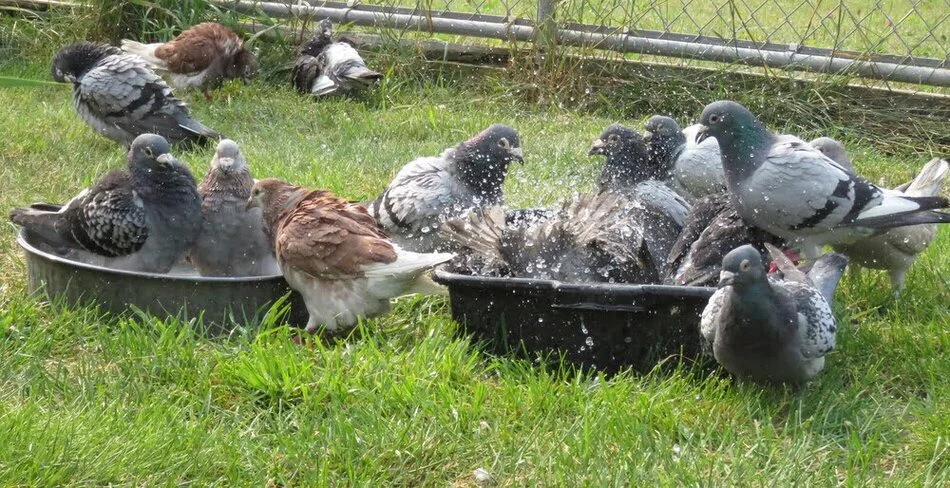
Bathing is one of the simple routines pigeons clearly enjoy. A clean pan and sensible timing can support normal preening and help birds remove dust and loose material from their feathers.
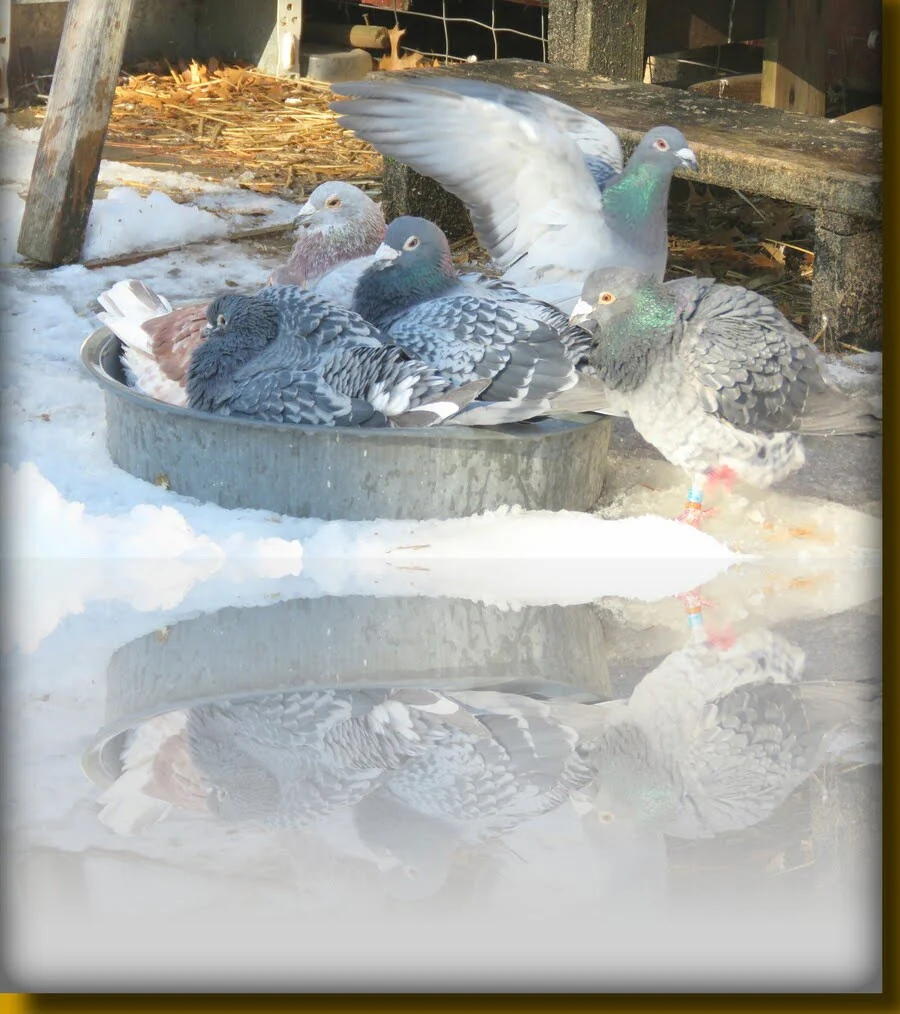
Use a stable pan or tub that the birds can enter and leave easily. A shallow level of clean water is enough for normal bathing. Wash the pan after use, and replace the water if it becomes dirty while birds are bathing.
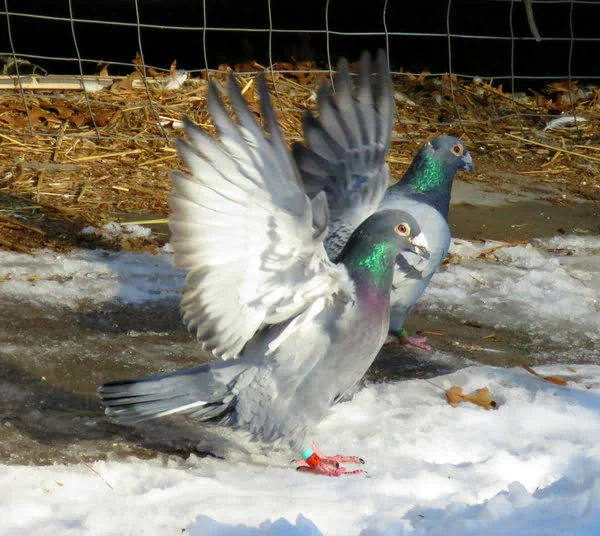
During warm weather, birds may be interested in bathing more often. In spring and fall, watch temperature, wind, and the time available for feathers to dry. Northern Minnesota winters require more caution: wait for a calm, sunny, milder part of the day and skip the bath when conditions are frigid or windy.
The goal is not to follow a rigid calendar. Watch the birds and the conditions in front of you. The Northern Minnesota loft calendar puts that decision inside the larger seasonal routine.
For routine bathing, plain clean water is the straightforward choice. This article does not recommend adding pesticides, dewormers, or other medications to bath water. Products intended for buildings, household insects, or another species should not be applied to pigeons unless a qualified avian veterinarian has specifically directed their use for that bird and explained the dose and method.
Frequent scratching, damaged feathers, visible parasites, changes in droppings, appetite loss, breathing changes, or unusual behavior deserve careful evaluation. Clean the loft and equipment, separate a concerning bird when appropriate for your setup, and contact a qualified avian veterinarian for diagnosis and treatment guidance.
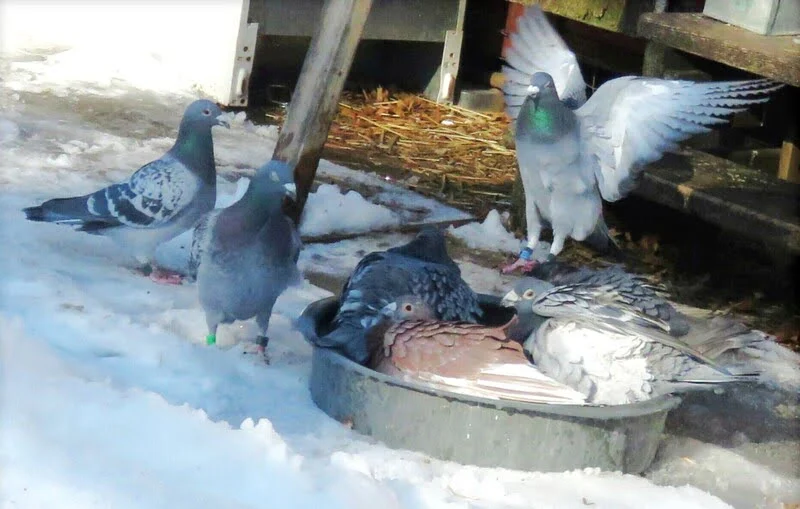
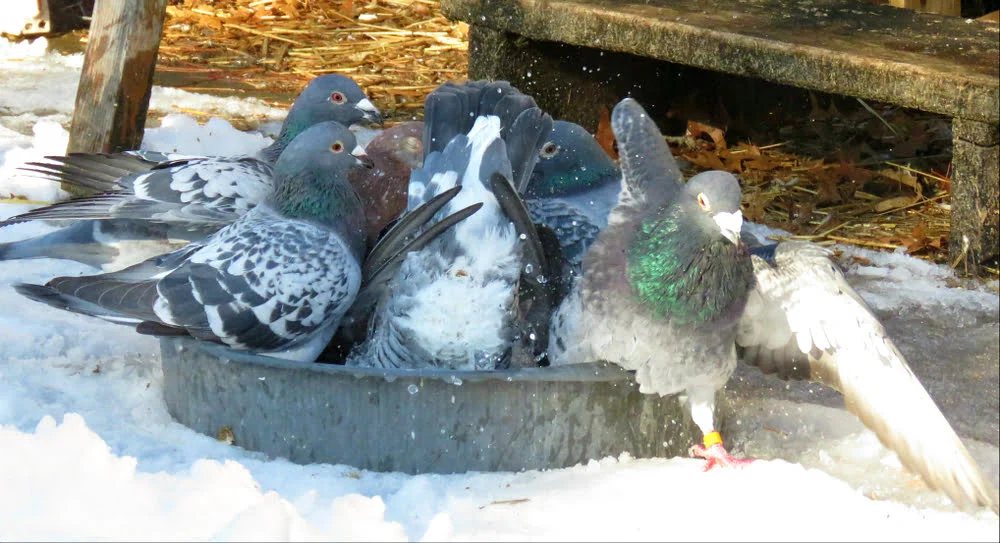
Clean water, clean pans, appropriate weather, good feed, and a well-maintained loft do more than a complicated shortcut. Watch the birds, remove the water when bathing is finished, and keep notes if a change in condition needs follow-up.
For more 4-Way Loft routines, browse the article library or contact the loft with a specific, non-emergency question.

I’ve been around pigeons my entire life. My dad learned from the old timers in Germany as a kid and won his first homing pigeon race at the age of 15. He immigrated to USA at age 20. He introduced me to all the workings of his loft when I was just 6 yrs old. I’ve been hooked ever since. Pigeons are a part of my identity.
We wrote many blog articles posted on our other pigeon website. Instead of us duplicating blog posts here, just click the button below to read them. They are informative, entertaining and should address any questions you might have. [If not just ask via message, email or phone.]
If you want golden nugget Quick-Tips right at your fingertips then be sure to click the button below to again, be taken to our other pigeon website. There you will find a wealth of knowledge obtain from a lifetime of raising pigeons in bit size pieces.